Four Tulsa County ZIP codes were listed in red for severe risk of COVID-19 in the latest Tulsa Health Department hazard map on Friday — and the specific reasons are unclear as the trends worsen.
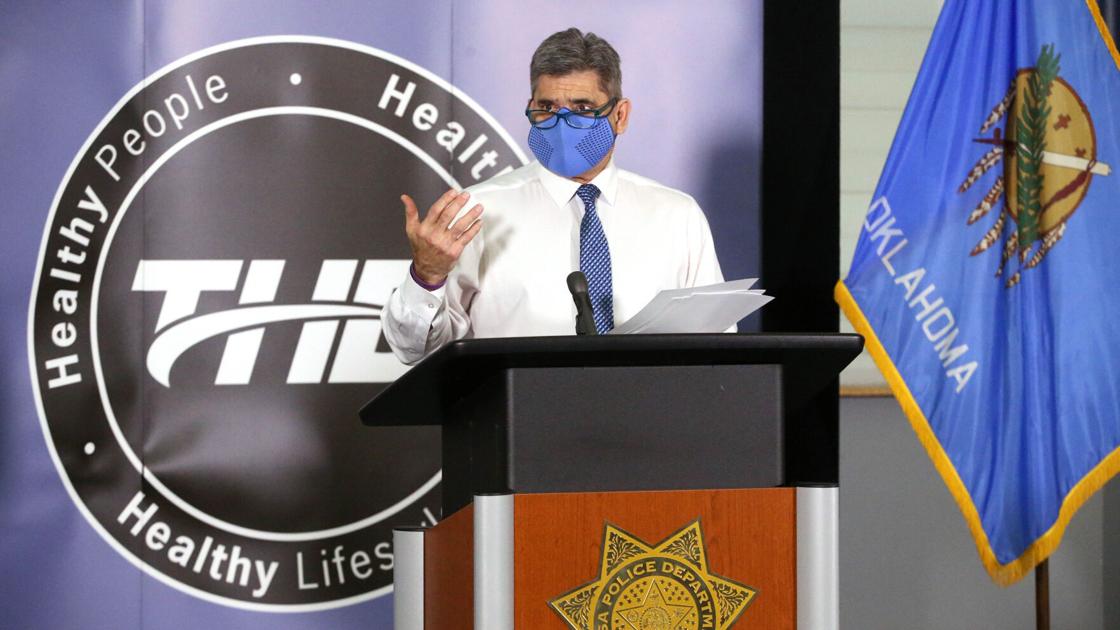
Dr. Bruce Dart, THD's executive director, said the department can't pinpoint primary sources of transmission because only about 15% to 20% of people in recent weeks have been open with contact tracers, whereas early in the pandemic residents were "extremely forthcoming" with information.
Dart said he and THD are becoming a bit frustrated because they can't gather the necessary in-depth information, which makes it difficult to formulate specific public health recommendations with an incomplete picture of what is happening locally.
"We identify risk settings by what people tell us, but when only 15% are being forthcoming, we don't get a really good idea of what true risk is or what true outbreak settings are," Dart said. "Honestly, I hope that moving to a digital platform for contact tracing will maybe promote people to be more forthcoming with information, but right now on the phone they're not telling us."
Cumulatively, five different ZIP codes have been in THD's red level either this week or last.
ZIP codes 74050, 74103, 74131 have been red the past two weeks, with 74033 becoming red this week. ZIP code 74134 was red a week ago.
Red signifies "severe and uncontrolled" COVID-19 spread, meaning "outbreaks are present and worsening," according to THD's map.
Orange is high risk; yellow is moderate risk; and green is low risk. There were 29 ZIP codes in orange in the latest update and nine in yellow. None were green.
On the map's public launch Sept. 28, there were 12 orange, 28 yellow and two green on Sept. 28 — markedly better than now.
There is one notable setting offering transparency this week, but it certainly doesn't account for all of the disease's highest rate of spread in the county or even that lone ZIP code: the northwest downtown quadrant of 74103.
The Tulsa County Sheriff's Office announced Tuesday that there were 84 active COVID-19 cases among inmates after testing the entire population, with another six in jail staff. Spokeswoman Casey Roebuck on Friday said the active number had risen to 111.
The 74103 ZIP code was 4.5 times above the entry threshold into the red category a week ago. On Friday, the rate nearly doubled to 8.5 times the red threshold. For comparison, the next highest ZIP code Friday was 74050 at 1.75 times the red threshold.
The rates are based on the 14-day average of active cases per 1,000 people in each ZIP code.
Dart noted that while the 84 positive inmate cases announced Tuesday constituted the top single setting for spread, there were about 1,200 cases reported throughout the county during that time frame.
Dart said it could be that family or group gatherings are becoming more of a problem, but it's difficult to determine the main issue or issues without help. It's been a gradual transition over time from openness to mum, he said.
"If we can get information we can work collectively to mitigate," Dart said. "It's really easy to mitigate when you know what the sources are, it truly is.
"In the past people have been really responsive when we've talked about these specific settings contributing to enhanced transmission. Without having that information, it frustrates us because we want to help people and we want to protect people. It's difficult without having all of the information we need to provide to the public."
Dart in June pointed to the "serious seven" for spread: weddings, funerals, faith-based activities, bars, gyms, house gatherings and other small events.
As the pandemic has evolved, so to have the settings that THD has identified as highest risk for virus transmission.
For September, Dart said the most associated cases in order were: K-12 schools; health care; food service facilities; long-term care facilities and nursing homes; and dorms and college housing.
But without public cooperation, he said, THD doesn't know which direction to go nor how best to help people besides the general precautionary measures of wearing a mask, watching your distance and washing your hands.
"When we say, 'Oh we should lock down restaurants or bars,' but the data — because people aren't telling us — is not showing that those are risk settings," Dart said. "From a data perspective, it's hard to make the case.
"We need everyone to just be forthcoming with us. If we see that more and people start giving us more information, maybe we can make a recommendation based on more in-depth data because it's hard to make a recommendation on only 15% to 20% of the information."
Video: Dr. Bruce Dart talks about Tulsa County's COVID-19 hazard map.
COVID-19 basics everyone needs to know as the pandemic continues.
How it spreads, who's at risk

Studies have shown many infected people show no symptoms or have symptoms so mild they may go undetected; those people can still transmit COVID-19 to others while asymptomatic.
Data from China show that about 20% of patients diagnosed with COVID-19 require hospitalization.
The disease can be fatal, especially for vulnerable populations: those older than 65, living in a nursing home or long-term care facility, and anyone with underlying health conditions such as diabetes, heart disease, lung disease or obesity.
Science of virus spread

COVID-19 is spread mainly from person to person via respiratory droplets produced by an infected person. Spread is most likely when people are in close contact, within about 6 feet. A person might also be infected with COVID-19 after touching a surface or object that has the virus on it and then touching their face. According to the CDC, evidence suggests the novel coronavirus may remain viable for hours to days on surfaces.
List of symptoms

The CDC recently expanded its list of possible symptoms of COVID-19. The symptoms can appear from two days to two weeks after exposure.
- Fever or chills
- Cough
- Shortness of breath or difficulty breathing
- Fatigue
- Muscle or body aches
- Headache
- New loss of taste or smell
- Sore throat
- Congestion or runny nose
- Nausea or vomiting
- Diarrhea
This list does not include all possible symptoms and will continue to be updated by the CDC. One symptom not included is "purple toes," which someone may experience with no other symptoms, sometimes several weeks after the acute phase of an infection is over. The coloration and pain is caused by a lack of blood flow to the toes caused by excessive blood clotting, a late-stage concern with COVID-19 infections.
Kinds of testing

Those getting tested may experience different kinds of swabs. The viral test, known as PCR, involves a deep nasal swab that can be painful.
Other tests that require less-invasive swabs may produce results faster, but with less accuracy. These should not be used diagnostically.
It is not yet known whether COVID-19 antibodies can protect someone being infected again or how long protection might last.
The 'serious seven'

The "serious seven" refer to close contact environments where residents should take extra precautions if they choose to attend. The seven are gyms, weddings, house gatherings, bars, funerals, faith-based activities and other small events, according to Tulsa Health Department Director Bruce Dart.
Treatments being investigated

The FDA has allowed for antiviral drug remdesivir, previously tested on humans with Ebola, to treat more severe cases of COVID-19 in adults and children. Safety and effectiveness aside, preliminary studies have shown it can shorten recovery time for some patients.
After previously approving an emergency use authorization, the FDA as of July 1 cautions against use of hydroxychloroquine or chloroquine for COVID-19 outside of the hospital setting or a clinical trial. A review of safety issues includes reports of serious heart rhythm problems and other safety issues, including blood and lymph system disorders, kidney injuries, and liver problems and failure.
Convalescent serum therapy

Some patients are receiving convalescent serum, meaning the antibodies made by people who have recovered after a COVID-19 infection. Antibody-rich blood plasma is being given to severely or critically ill COVID-19 patients, including Ascension St. John, Saint Francis Health System, OSU Center for Health Sciences and Hillcrest HealthCare System in Tulsa.
From June to July, requests for convalescent plasma from the Oklahoma Blood Institute multiplied seven-fold.
Recovery, as defined by CDC

To be considered recovered (without a test), these three things must happen, the CDC advises:
- No fever for at least 72 hours (three full days of normal temperature without the use of medicine)
- Other symptoms improved (no more cough, etc.)
- At least 10 days since symptoms first appeared
Subscribe to our Daily Headlines newsletter.
October 17, 2020 at 08:04AM
https://tulsaworld.com/news/local/four-tulsa-county-zip-codes-are-in-red-and-contact-tracers-cant-determine-reasons-because/article_5d65d36a-0ff8-11eb-accc-1b95e25e8e06.html
Four Tulsa County ZIP codes are in red, and contact tracers can't determine reasons because people are staying mum - Tulsa World
https://news.google.com/search?q=Red&hl=en-US&gl=US&ceid=US:en


No comments:
Post a Comment